Whether you participate in it or not, you cannot help but be aware of Australia’s real estate market, as there is always a lot of news about what happens in this market.
You might even think that all the most recent activity in real estate is a good thing. It’s building more homes for people and it’s employing people. That’s all good right?
The answer is a little bit more complex than that. Yes, a great deal of people is employed in the construction and real estate industry. This is encouraged by governments at all levels because firstly it generates income for them and it also gives the impression of economic activity. Local Councils receive income from increased rates and development fees. State governments receive stamp duties from property transfers. Federal governments can count construction as GDP activity and point to the number of people currently employed by the construction sector.
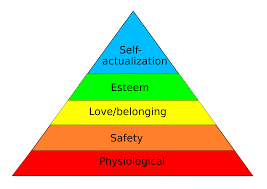
But, what exactly is real estate and property? At its most basic level, it is shelter, one of our fundamental needs. It’s up there with nutrition and hydration. On Maslow’s hierarchy of needs, safety (security) rates just under physiological (food, water) in order of importance.
Yet in Australia, it has become an asset class that relies on constant increases. Once upon a time, people held real estate for yield. Now they hold it for capital gain. And this has had a disastrous effect on households and our entire economy, particularly on our private debt levels.
People have bought into property in the expectation that property will always rise. This is not actually the case (see previous post). Constantly rising property prices are only a feature of the past 50 or so years, it’s not something that has happened consistently in the past. Not before credit and debt became the predominant measure of an economy’s growth anyway. This has benefitted property and associated industries greatly but at the expense of other more productive businesses.
To fully understand why all this investment in Australian property is not necessarily a good thing, it is first important to understand how a traditional business works.
A traditional business usually creates a good or service at a particular price, and then it sells it at a higher price that will hopefully include enough income to cover the cost of the original product or service, the associated expenses in creating this product or service, and profit. The whole business model implies trade, which has existed for many thousands of years.
If the business does not consistently generate a profit, it will eventually go out of business and cease to exist. Our federal governments rely on businesses making a profit as their revenues are reliant on taxes charged on this profit.
A very important component of a traditional business, from the largest multinationals to the smallest micro business, is that it also employs people in the foreseeable future as the business continues to create the product or service to sell to repeat or new customers. If it’s a good product, it potentially has the whole world as its market.
Now look at property and housing construction. A number of people are employed at the start of the housing construction, from architects to builders and all the services required to construct the dwelling. However, once the house is complete, there is no more ongoing employment on a regular basis.
If the dwelling is for investment, at best it may provide ongoing employment for a property manager. Yes, it will have the occasional need for a tradesperson, but not enough to keep them gainfully employed indefinitely. And of course a whole group of people won’t be employed at all if the investment property in question is an existing house rather than a new one requiring construction.
What’s important to realise is that property is a non-productive consumption item at the end of the day.
At this point in time, there are trillions of dollars tied up in Australian real estate. That is a lot of money to be tied up in what is essentially a consumption item that provides shelter, a basic human requirement, but does not provide ongoing jobs or employ people gainfully. You cannot keep on constructing buildings ad infinitum.
Granted, given our love affair with property, a number of complementary businesses have sprung up to provide various services, including real estate agents, property managers, buyer’s agents, investment and financial advisers, property commentators, educators and organisations that do nothing but provide property statistics, to name but a few. Yes, a whole industry has grown reliant on the property markets, particularly for investors.
There are also myriad property spruikers touting different ways of investing in property from property options, no money down deals, instalment contracts (rent to buy) to buying for development, all to try and get ever more productive dollars into this unproductive asset class.

However many of these businesses do not even add value to the basic product of property. They’re just another unneeded layer adding their percentage to the final price.
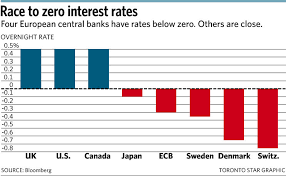
And with lowering interest rates, more people are being encouraged to put yet more borrowed funds into housing (as well of course, into other consumption items).
There’s an implacable belief by Australians that property doubles every seven to 10 years. It doesn’t.
This is coupled with the second belief that property always goes up. And once again, no it doesn’t.
Compounding the problem further, interest rates are being kept artificially low, ostensibly to stimulate demand and investment, but in reality causing ever more resources to pour into housing.
And to top it all off, there are the extraordinarily generous tax breaks given as a reward to people who make a loss on their investment. The most generous in the world in fact, by allowing the losses made on investment properties to be offset against ALL income, rather than just the income received from property. A tax break unavailable to other businesses.
I’m sorry, but isn’t the whole idea of investing to make money? Call it speculation or gambling, hoping that capital gain will put your investment in the black, but don’t call it investing. I call it the BHP strategy – buy property, hold it and pray that the prices will go up.
Of course, capital gain isn’t capital gain until it’s locked in, that is, the asset is sold and the value realised. After all, what goes up can also go down, but that’s a story for another post.
Are you starting to understand the case of gross misallocation of capital into a very unproductive area?
 Instead these funds could be put to good use in real businesses creating real products and real wealth by providing a continuous stream of goods and services and continually employing people.
At the end of the day, real wealth can only be produced by real business creating a good or service. If too much wealth is created simply by virtue of capital gain, without any real labour or transformation of raw materials into a finished product, the economy is impacted and real wealth starts to disappear as wage growth slows. This benefits nobody but the owners of the property, at the expense of the real producers.
Eventually the economy stagnates as real productivity falls along with the aforementioned lack of wage growth and our standard of living drops.
We’re not going to create wealth if all we do is sell property to each other. That would indeed be a gross misallocation of capital of the highest order.